Emergency Water Extraction & Drying · Houston
Crawl Space Water Removal in Houston, TX 77009
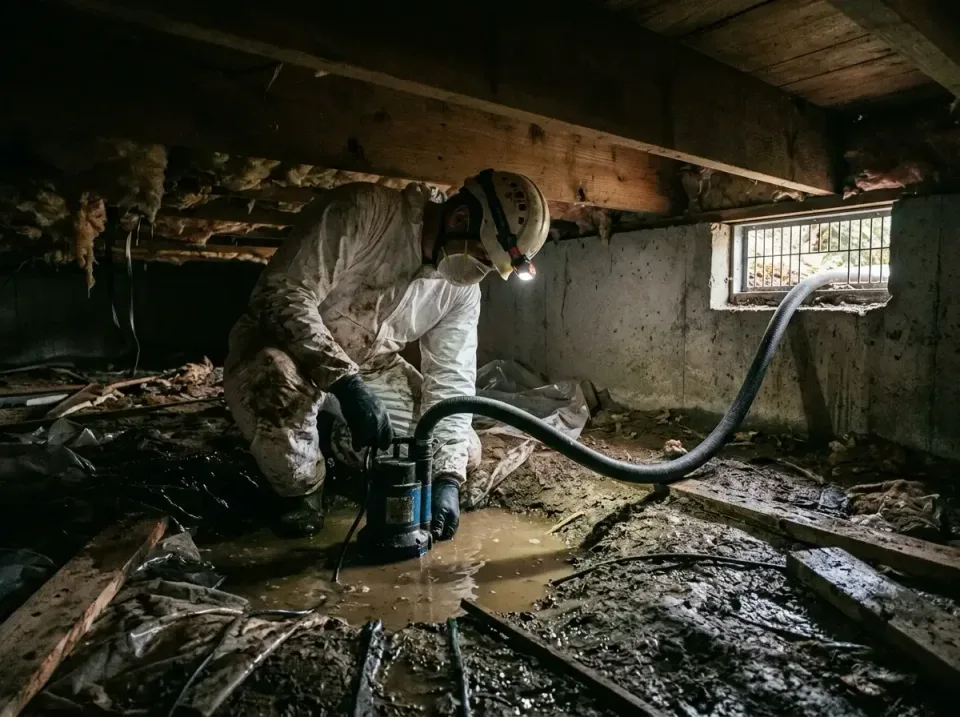
Wet soil, damp insulation, or pooled water beneath your Houston home needs attention before the crawl space affects floors above. Houston Water Damage Pros documents the scope with Xactimate, including drainage concerns near White Oak Bayou and Barker Reservoir.
- 4.9 from 7,654 reviews
- 24/7 emergency line
- Serving since 2001
- IICRC Water Restoration Technician (WRT) certification
- IICRC Applied Structural Drying (ASD) certification
Crawl Space Moisture Can Reach Downtown Floors
A damp crawl space after a storm deserves inspection when floors feel soft, insulation sags, or a musty smell rises through registers. Harvey-type rainfall can saturate subfloors, and trapped moisture remains difficult to detect from the living area alone.
-
Soft or swollen flooring: Moisture below can move into subfloor panels and create movement underfoot. We use targeted readings before recommending Subfloor Drying, rather than guessing from surface appearance.
-
Persistent dampness: High humidity slows structural drying, so a crawl space may look improved while framing remains wet. In Downtown Houston properties, limited access can also require stair-carry portable extractors instead of large equipment.
-
Access or disposal concerns: A tight opening, damaged insulation, or contaminated water changes the work plan. The Texas Department of Licensing and Regulation may apply to mold-related assessment, while our crew documents the extraction scope.
If you notice soft flooring, damp insulation, or recurring odor, contact Houston Water Damage Pros this week before concealed moisture damages the subfloor.
Four Checks Shape Crawl Space Drying
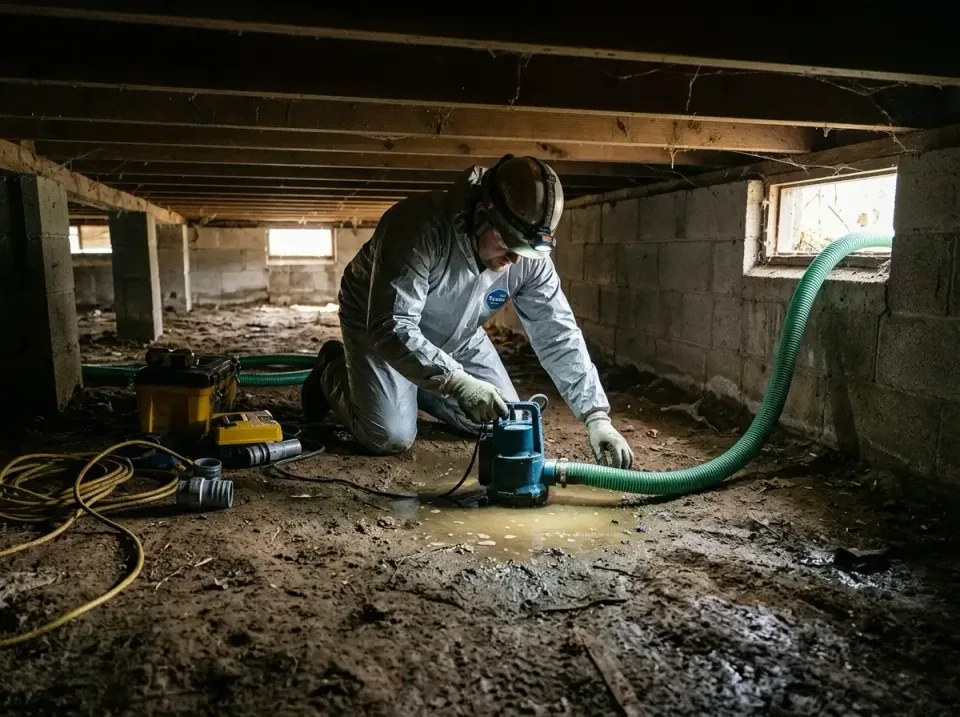
The first operational step is a scope review of the entry point, water path, floor system, and affected materials.
-
Access review: We inspect the crawl space opening and note conditions around Allen’s Landing-area properties or other tight Houston sites so equipment and worker access are planned safely.
-
Water assessment: We determine whether the source is clean, gray, or black water and document affected soil, insulation, wood, and subfloor surfaces before extraction.
-
Water removal: Wet extraction begins with equipment matched to the space; related Standing Water Removal may be included when pooling extends beyond the crawl area.
-
Measured drying: We position air movers and dehumidification, then record readings until materials stabilize. A typical dry-down is 3–5 days, though dense materials and hidden cavities can take longer.
-
Closeout review: We compare final readings with the starting map and explain salvage-versus-replace decisions. Properties near Hermann Park receive the same documented review, regardless of access difficulty.
Why Hire a Pro for Crawl Space Water Removal?
After afternoon Gulf Coast thunderstorms, a homeowner near Addicks Reservoir may see only a shallow pool while insulation and framing remain wet below. DIY equipment rarely shows what is happening inside the floor assembly.
-
Right-sized equipment: Our crew selects extraction and drying capacity for the crawl space volume, access, and material type rather than placing household fans at the opening.
-
Safer work planning: A humid subtropical climate year-round makes confined, hot spaces harder to work in safely. We plan entry and protective measures with safety-trained field crews and do not treat a crawl space like an open room.
-
Documented decisions: Moisture maps and daily readings show whether drying is progressing, helping customers avoid paying for unnecessary demolition or premature repairs.
-
Clear scope: If stormwater affects the home above, we can coordinate Storm Flood Extraction with crawl space work and explain each charge before work expands.
From homes near Buffalo Bayou Park to properties near George Bush Intercontinental Airport, Houston Water Damage Pros keeps the quote tied to access, equipment days, and actual affected materials.
What Drives Houston Crawl Space Costs?
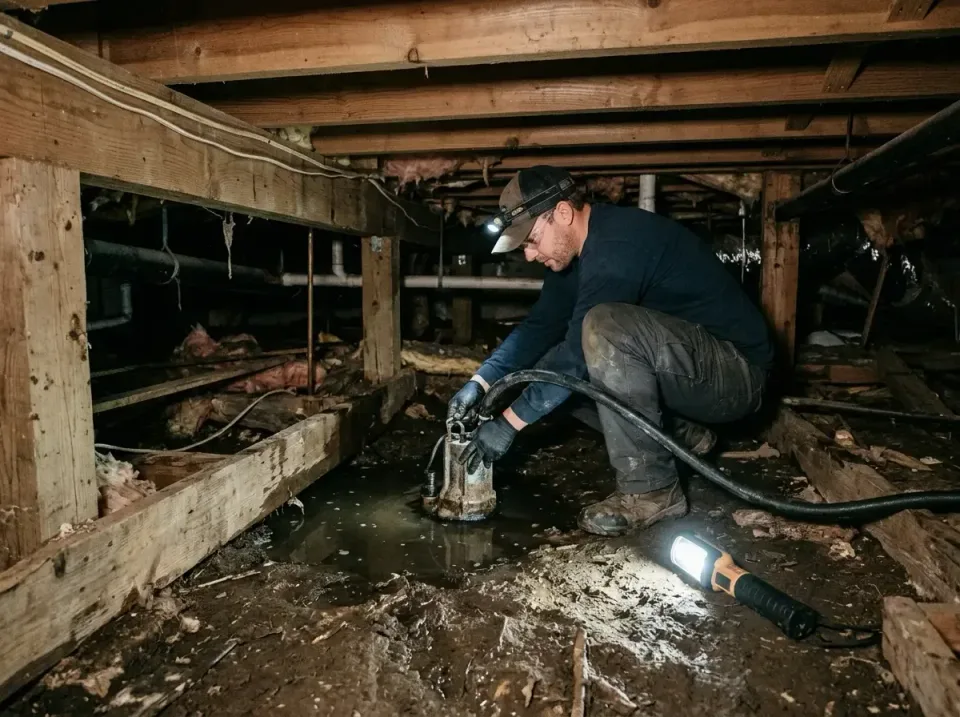
A small, open crawl space with clean water costs less to dry than a tight cavity containing wet insulation, mud, or contaminated water. Quotes vary by water category, square footage, and access.
| Job type | Typical range | Main price driver |
|---|---|---|
| Crawl space drying | $1,200–$4,500 | Access difficulty |
| Single-room extraction | $400–$1,200 | Moisture class |
| Whole-house flood dry | $3,000–$12,000 | Square footage |
| Sewage backup cleanup | $2,500–$8,000 | Contamination |
Tropical storms can dump 10-plus inches, increasing the amount of water and equipment time required. Homes reached from Gulf Freeway I-45 or Katy Freeway I-10 may also need careful staging when driveways or entrances are tight.
Relative humidity frequently above 70% can extend drying, while summer heat often exceeds 95°F and affects crew conditions. Contact Houston Water Damage Pros at (213) 672-5054 for a final quote matched to the job scope.
Ready to get started?
Our line is open 24/7 in Houston.
Featured Work & Projects
Browse our recent jobs and quality workmanship for customers across Houston.
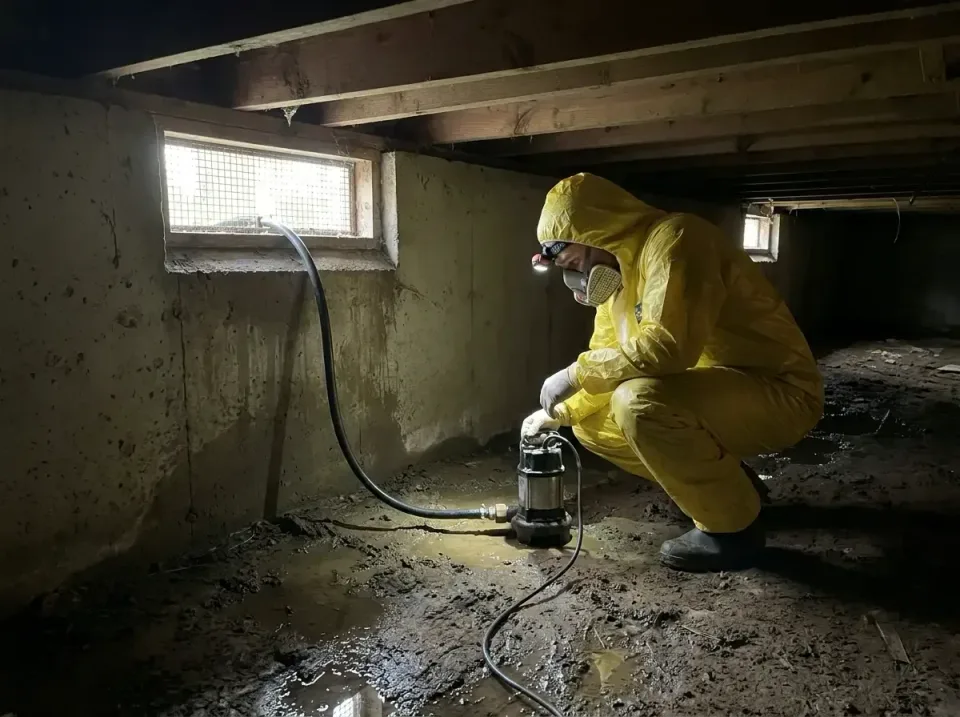
Submersible Pump — Crawl Space
Submersible Pump — Crawl Space
Submersible Pump — Crawl Space
Technician — Crawl Space
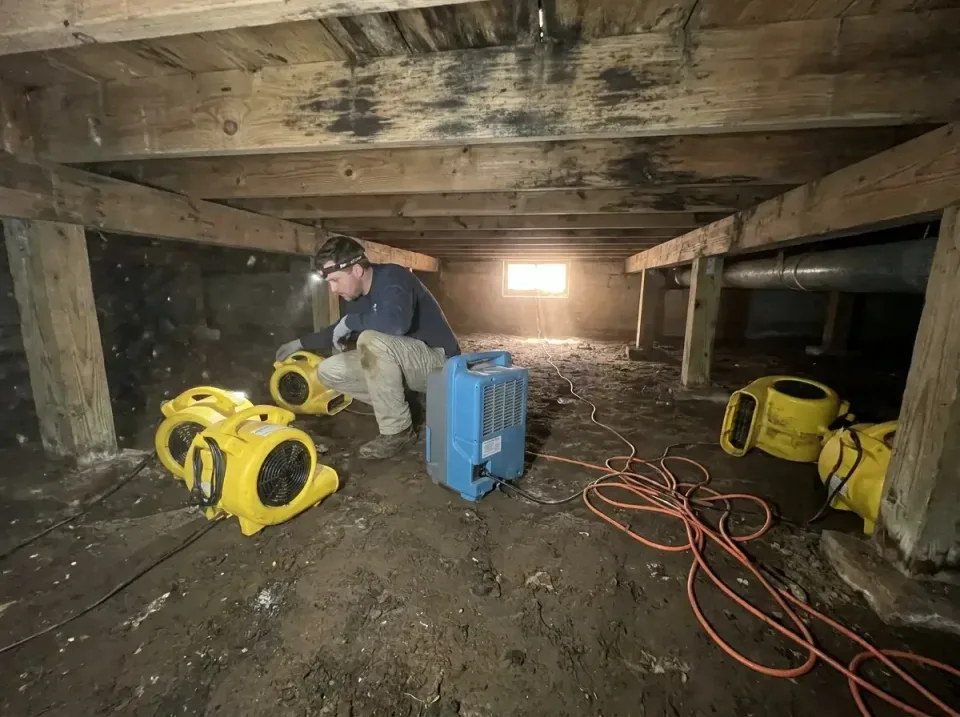
Technician — Water Damage Restoration
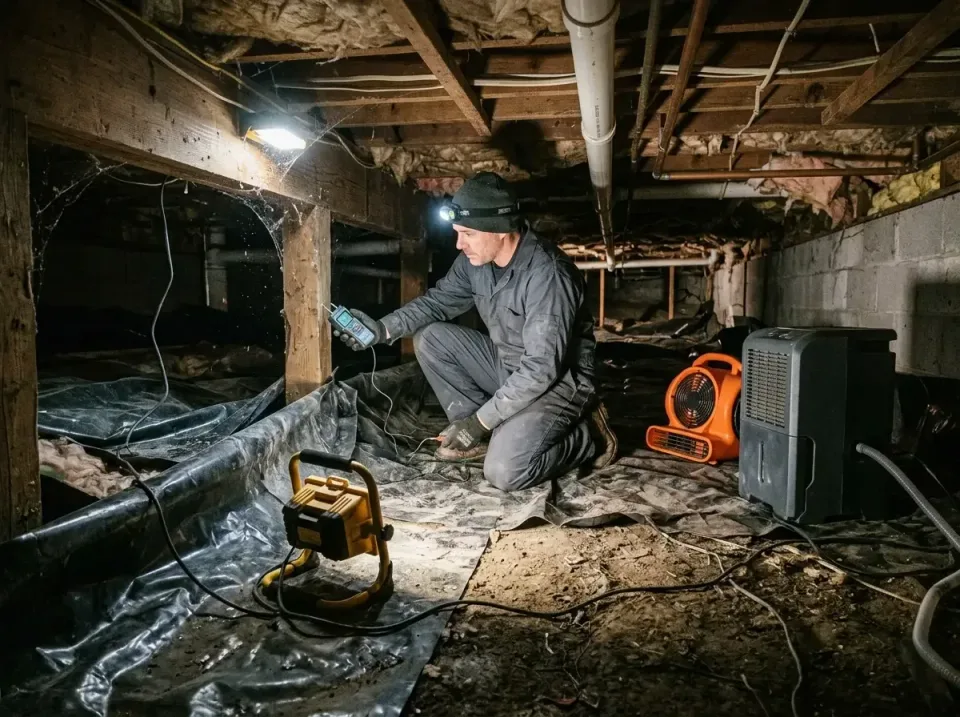
Technician — Crawl Space
Services We Offer in Houston
25 services for homes and businesses in Houston. Pick one to see what the job involves.
Crawl Space Water Removal
Crawl space drying removes water, mud, and wet insulation; Houston jobs typically cost $1,200–$4,500 based on access. Discovery Green, Energy Corridor, and Memorial Park homes need measured scope.
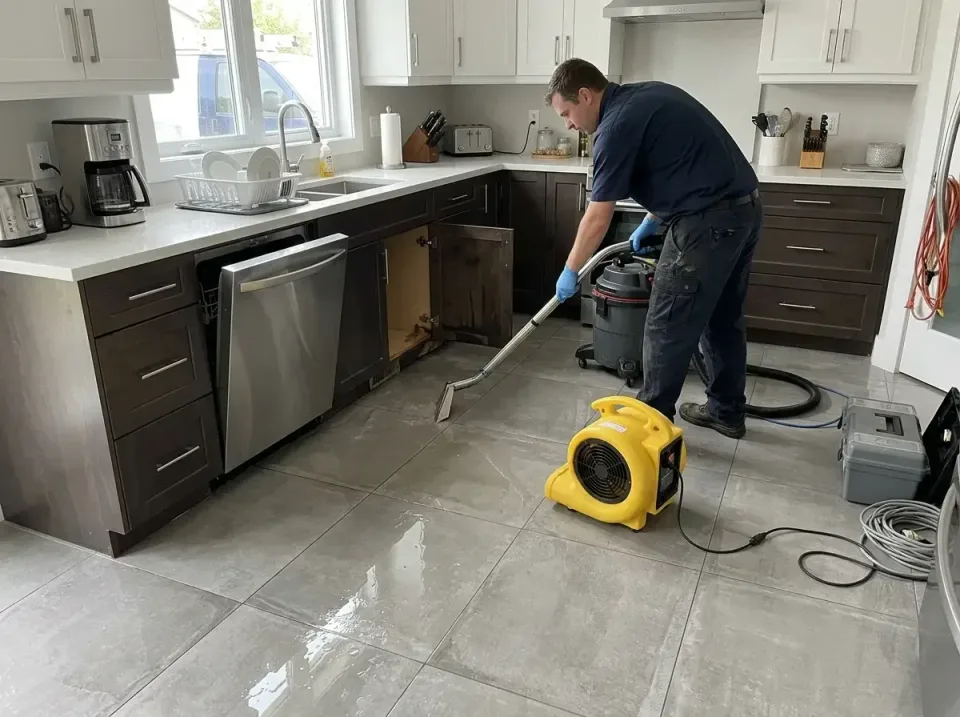
Appliance Leak Water Removal
Appliance leak cleanup removes water under cabinets and from flooring. Typical jobs run $300–$1,500; frozen copper lines, Houston humidity, and Red Line access affect scope.
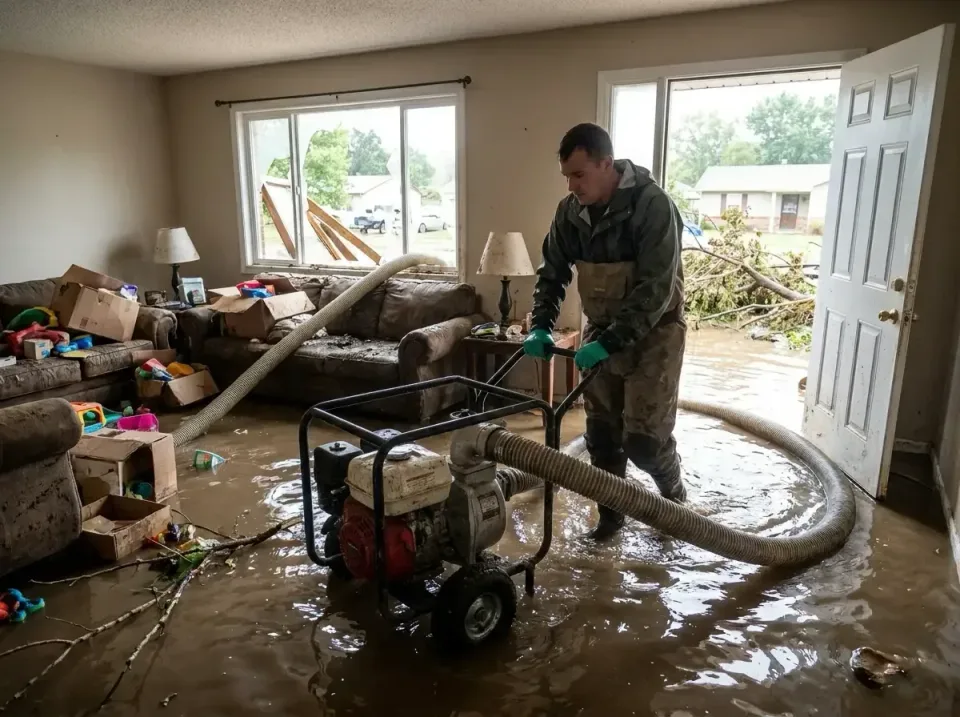
Flood Water Removal
Flood Water Removal clears homes and job sites with pumps and extraction gear; typical whole-house drying is $3,000–$12,000, driven by square footage.
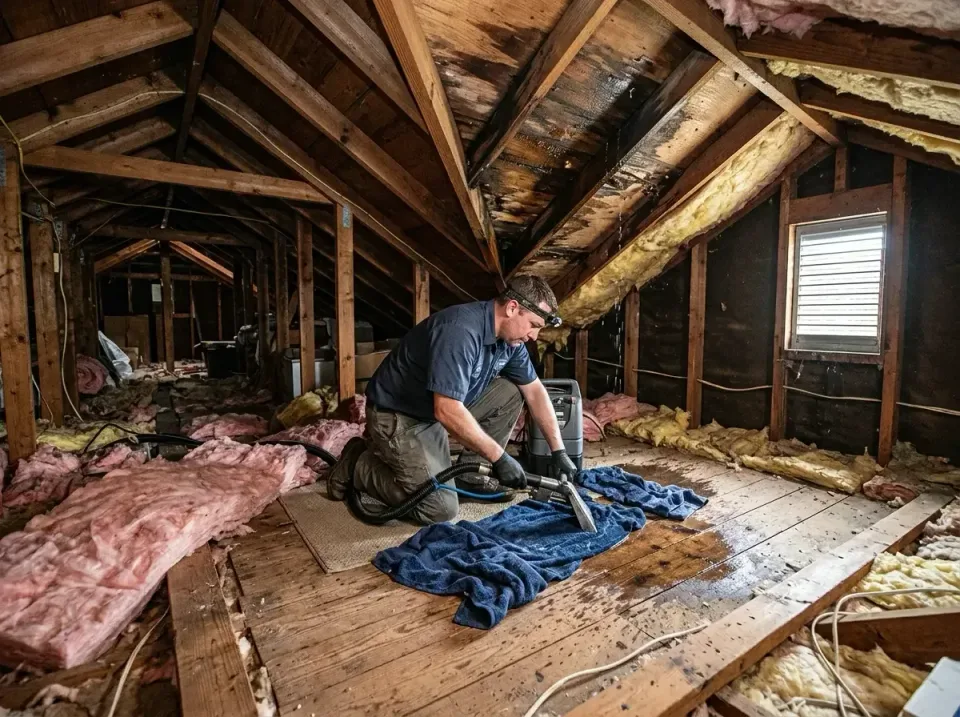
Slab Leak Water Removal
Slab leak removal for homes and contractors, including subfloor moisture under concrete. Typical jobs run $1,500–$5,000, depending on access and drying days.
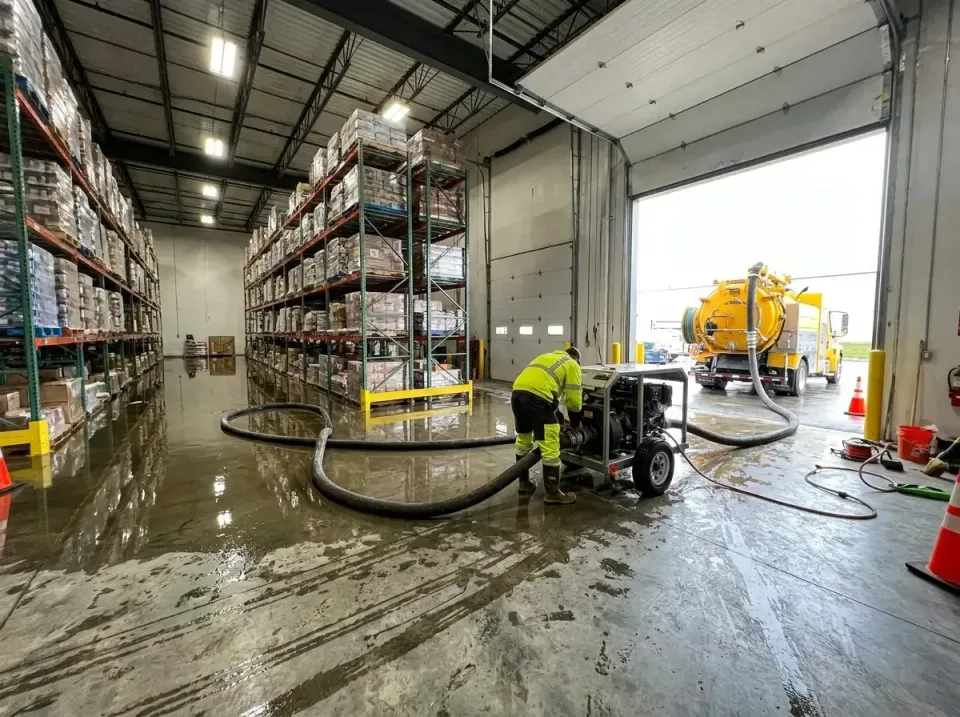
Warehouse Water Removal
Warehouse Water Removal clears wet inventory areas, pallets, and concrete-floor water for Houston contractors and managers. Typical jobs run $5,000–$20,000, driven by access.
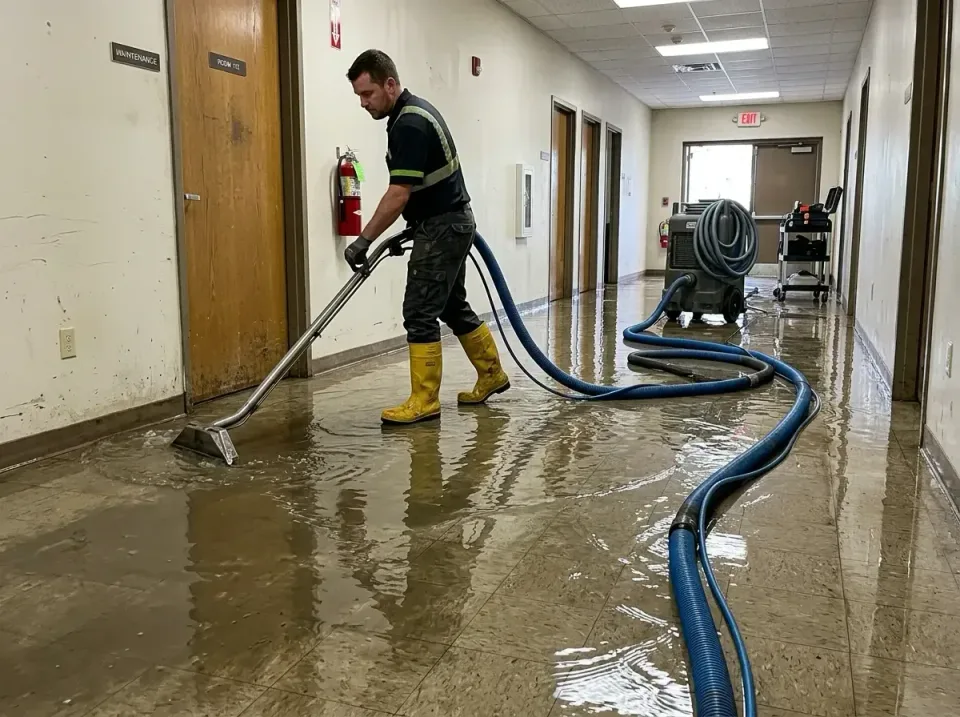
Standing Water Removal
24/7 standing water mitigation for homes and offices, including multi-room extraction. Typical jobs run $400–$1,200 based on moisture class; Houston dispatch available.
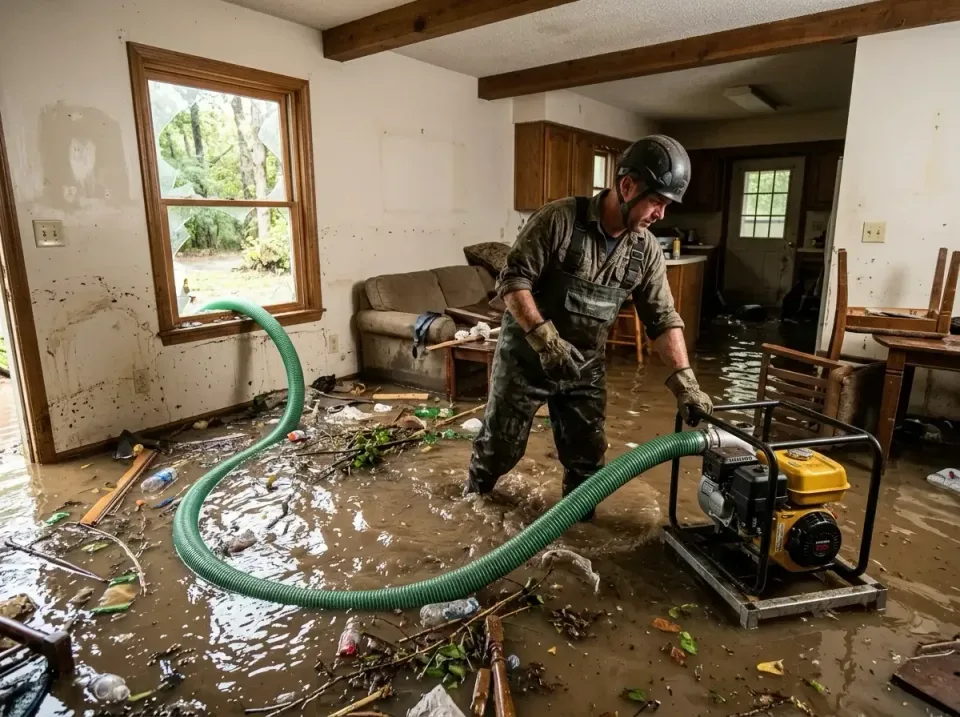
Hurricane Flood Water Removal
Hurricane flood extraction for Houston homes or contractors, including silt and soaked contents; typically $2,000–$10,000, based on square footage and access.
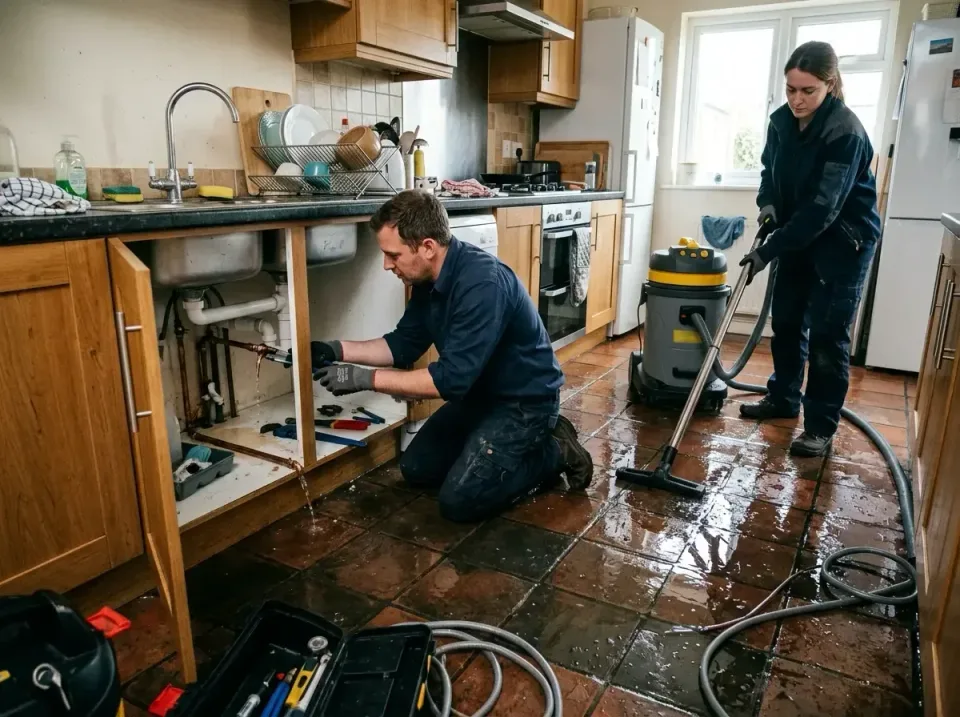
Burst Pipe Water Extraction
Burst pipe extraction for Houston homes and contractors, including room-scale wet extraction. Typical jobs run $400–$1,200, driven by moisture class and access.
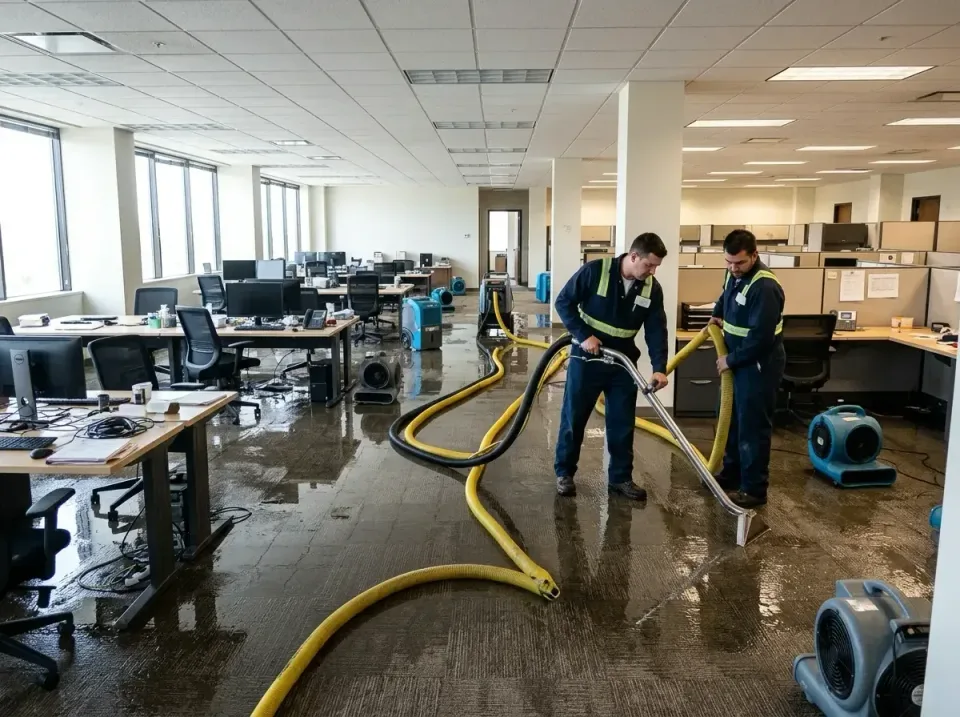
Office Building Water Extraction
Office extraction covers wet suites and carpet; METRORail access, Minute Maid crowds, and Rice schedules shape logistics. Typical $5k–$20k, driven by equipment days.
25+
Years serving Houston
4.9★
From 7,654 reviews
25
Services offered
41
Areas served
Emergency Water Extraction & Drying FAQs in Houston, TX
Straight answers for customers in Houston on pricing, delivery, and scheduling.
Can Crawl Space Water Removal help if my HOA limits exterior changes?
Yes, Crawl Space Water Removal can often begin with interior access, documentation, and drying without changing the exterior drainage system. For a home in Uptown Houston, we can record the affected materials and provide a scope that helps the owner discuss any HOA or insurance requirement before additional work.
What should I send before scheduling Crawl Space Water Removal?
Before scheduling Crawl Space Water Removal, send photos of the entry, standing water, insulation, and any damaged flooring, plus the opening dimensions and approximate affected area. Those details help Houston Water Damage Pros plan equipment and identify whether responsible sewage transport may be needed instead of ordinary wastewater handling.
Does Crawl Space Water Removal require a permit or code review?
Sometimes, depending on demolition, floodplain work, wastewater discharge, and the materials involved; the IICRC S500 water damage restoration standard guides drying documentation but does not replace local approvals. Category 3 sewage may require regulated handling, while TCEQ wastewater disposal rules and OSHA 29 CFR 1910 confined space entry can affect the work plan.
Should Crawl Space Water Removal be bundled with other extraction?
Yes, Crawl Space Water Removal should be combined with Emergency Water Extraction & Drying when the same event affects floors, wall bases, or other structural areas. Sewage backup effluent requires a different containment and disposal approach, and Phoenix Restoration Equipment may be used when the job needs specialized extraction capacity.
What does completed Crawl Space Water Removal look like?
Completed Crawl Space Water Removal means affected areas have been extracted, equipment has been removed after documented drying, and remaining concerns are explained rather than hidden. Therma-Stor Santa Fe dehumidifiers may support the final dry-out, while Houston Water Damage Pros reviews readings, salvage-versus-replace choices, and any recommended follow-up.
Meet Your Local Experts
Daniel Martinez Lead Expert
Houston Water Damage Pros
"Emergency Water Extraction, Thorough Drying"
I started in Houston property maintenance and moved into water restoration after seeing how freeze events, burst copper pipes, and flash flooding along Buffalo Bayou damage homes. I built my trade around IICRC WRT practices, moisture mapping, and structural drying, with Houston’s humid subtropical climate and 24–48-hour mold-risk window guiding how I respond.
Get a Emergency Water Extraction & Drying Quote in Houston
Share job details below or call our team directly. Phone: (213) 672-5054
Areas We Serve Around Houston
Emergency Water Extraction & Drying available across Houston and nearby communities.